Why Ledger Live?
Ledger Live is the official companion application for Ledger hardware wallets. It provides a unified interface for managing accounts, viewing portfolio performance, sending and receiving assets, installing device apps, and connecting to partner services such as exchanges, staking providers, and DeFi integrations — all while keeping your private keys on your hardware device.
This guide walks you through every step: from downloading Ledger Live safely to troubleshooting common issues. By the end you'll understand how Ledger Live fits into a secure workflow and how to use its features to manage crypto responsibly.
Overview: What you'll need
Before we begin, ensure you have the essentials:
- A supported Ledger hardware wallet (Ledger Nano S, Nano S Plus, or Nano X).
- A computer (Windows, macOS, or Linux) with a free USB port, or the Ledger Live mobile companion for select workflows.
- A stable internet connection for downloading Ledger Live and synchronizing account data (only public blockchain data is fetched; private keys never leave the device).
- A private, offline location to store your recovery phrase safely.
1. Downloading Ledger Live safely
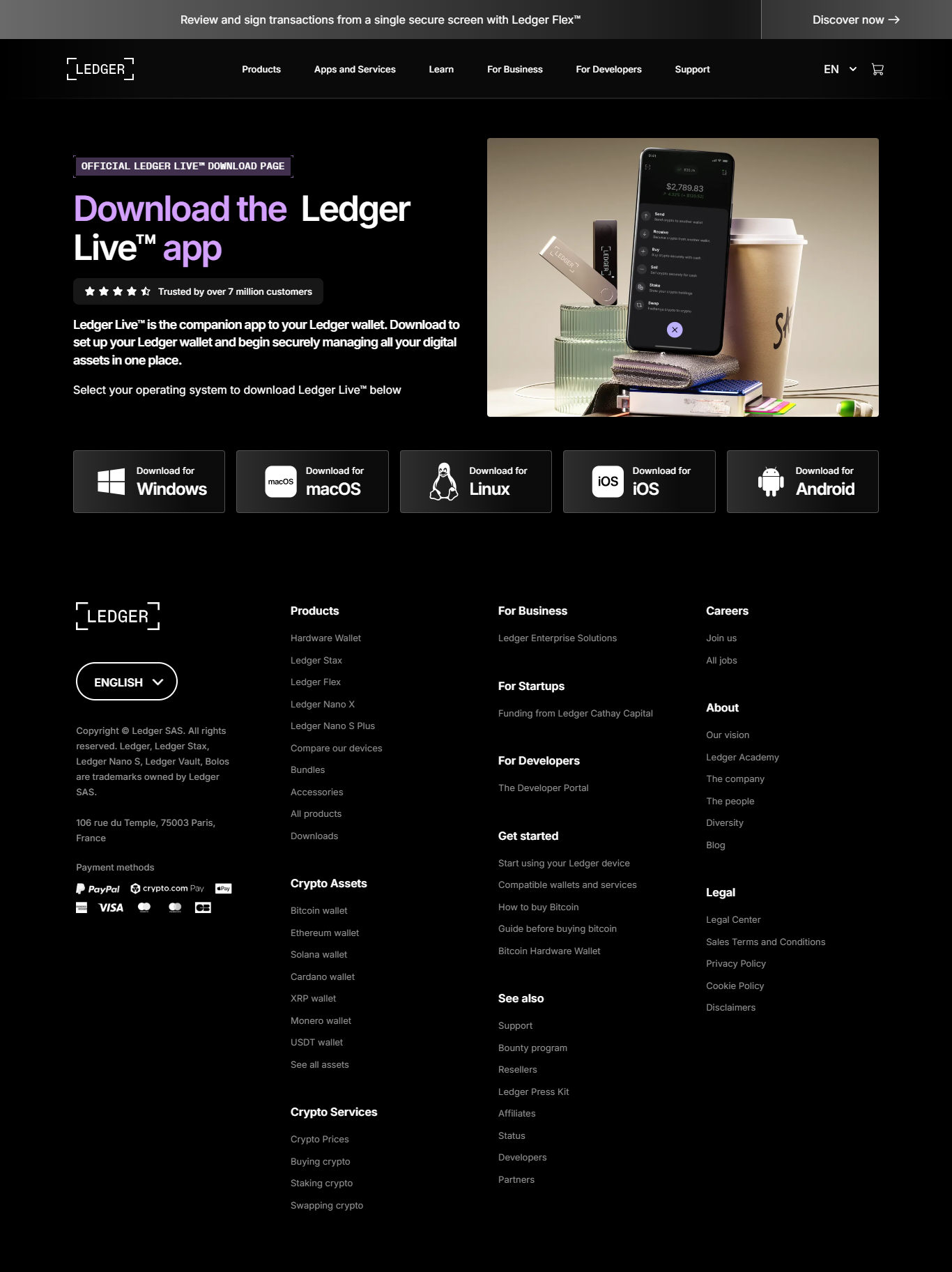
The most important rule: always download Ledger Live from the official Ledger website. Avoid third-party mirrors or downloads linked in forums or unknown sources.
- Visit the official start page: https://www.ledger.com/start.
- Choose your operating system and download the installer. For extra assurance, you can verify the checksum if Ledger provides it for the release.
- Run the installer and follow on-screen prompts. The app requires standard installation permissions and will place Ledger Live where other common apps are stored.
Pro tip: If you ever receive an unexpected email or link claiming to be Ledger support, don't click it. Always navigate to ledger.com directly through your browser.
2. Initial device setup
If you already have a set-up Ledger device, you can skip to adding accounts. If you are initializing a new device, follow these steps:
Connect the device using the supplied cable. Power it on and choose to set up as a new device (not to restore from recovery) if that's your intention.
Choose a secure PIN (4–8 digits depending on model); avoid trivial patterns. This PIN prevents local access to the device if it is lost or stolen.
The device will generate a recovery phrase (usually 24 words). Write these words down in order, on the provided card or another secure medium. Keep this offline and never share it. Ledger Live will never ask for this phrase.
During setup, you will be asked to confirm words from your recovery phrase to ensure you recorded them correctly.
Note: If you receive a device that already comes initialized with a recovery phrase or PIN, contact Ledger support — devices should be initialized by their owner only.
3. Installing and opening Ledger Live
Once Ledger Live is installed, open the app and complete the first-time prompts which connect the app to your device. You'll be asked whether you are setting up a new device or connecting an existing one — choose appropriately.
During the initial run, Ledger Live will download the necessary index and network data to display account balances and transaction history. This data does not include private keys or your recovery phrase.
4. Adding accounts
Adding accounts in Ledger Live involves selecting the asset type and allowing the app to read public account information from the blockchain. The steps are:
- Open Manager in Ledger Live and install the necessary app on your Ledger device (for example, Bitcoin, Ethereum) — these apps are small programs that enable support for each blockchain on your device.
- Return to the "Accounts" tab and choose "Add account". Select the currency and follow prompts to create an account that maps to the keys stored on your device.
- Ledger Live will then synchronize the account; balances and transaction history will appear in the app's UI.
You can add multiple accounts for the same currency (e.g., multiple Bitcoin accounts) to separate funds or manage different strategies.
5. Sending and receiving crypto
Ledger Live provides a clear, step-by-step flow for transfers. Every outgoing transaction requires verification on the device itself — this is your last line of defense against malware.
- To receive: Go to the Receive tab, choose an account, and display the receiving address. Always verify that the address shown in Ledger Live matches the address displayed on your Ledger device screen before sharing it.
- To send: Choose Send, enter the destination address, amount, and optional memo/fee preferences. Press Continue and then confirm the transaction details on the Ledger device screen — check amounts, addresses, and any contract data for smart contract interactions.
Pro tip: For smart-contract interactions (e.g., DeFi), check the encoded data on the device or use a recognized dApp integration to reduce risk.
6. Staking, Swap, and third-party integrations
Ledger Live partners with reputable service providers to offer in-app buying, swapping, and staking. These features are optional and are presented with clear partner information and device confirmations.
When using third-party integrations, Ledger Live acts as the interface while the final signing decisions remain on your device. Always verify the partner's identity and review fees/time estimates shown before proceeding.
7. Managing apps and firmware
The Ledger Manager section allows you to install and remove blockchain apps on your device. Only install the apps you need to reduce used storage; removing an app does not delete the account or keys — they remain recoverable via your recovery phrase.
Firmware updates may be released periodically. Ledger will display a clear update prompt in Ledger Live; follow instructions carefully and ensure you have your recovery phrase backed up before updating firmware as a best practice.
8. Security best practices
Never share your recovery phrase. Ledger and other official apps will never ask for it in messages or emails.
Keep your PIN private and consider using a passphrase for extra-deniability if you understand its tradeoffs.
- Store your recovery phrase in a secure, offline location (consider hardware steel backups for long-term storage).
- Verify transaction details on the device before signing — the device display is the authoritative source.
- Keep Ledger Live and device firmware updated. Updates include security fixes and new features.
- Be cautious with third-party browser extensions and wallets; prefer Ledger Live or well-known integrations with clear origin prompts.
9. Troubleshooting common issues
| Problem | Quick fix |
|---|---|
| Device not recognized | Try another USB cable, different port, or use a powered USB hub. Ensure Ledger Live is running and no other wallet software is blocking the device. |
| App installation fails | Restart Ledger Live and your device. Make sure firmware is up to date and your internet connection is stable. |
| Missing account balances | Confirm the correct app is installed on the device. Re-sync account or use the "Restore from recovery phrase" workflow if necessary. |
| Firmware update interrupted | Do not panic — reconnect the device, open Ledger Live, and follow recovery instructions. Have your recovery phrase available if asked (only as a last resort and never type it into Ledger Live). |
10. Advanced features for power users
Ledger Live supports more advanced workflows: multiple accounts, passphrase-protected accounts for added privacy, custom fee settings, and integration with developer tools. Consider these only after you understand basic custody and recovery.
- Passphrase: An optional extra word that acts like an extension to your recovery phrase. It creates a separate hidden account but must be managed carefully — losing it means losing access to those funds.
- Multiple accounts: Use separate accounts to segregate funds for trading, long-term holding, or operational purposes.
- Developer mode: Ledger devices can be used with developer tools and SDKs to build integrations and test apps locally.
11. Compliance & privacy
Ledger Live collects minimal telemetry by default and provides transparency about data collected. Synchronization with blockchain networks pulls public information like balances and transactions; your private keys never leave your device. Review Ledger's privacy policy for details on data handling and opt-outs.
12. Recovering access — if you lose your device
If your Ledger device is lost or damaged, you can recover accounts on a new device using your recovery phrase. To do so:
- Acquire a new, genuine Ledger device.
- During setup, choose "Restore from recovery phrase" and carefully enter your words in the correct order.
- Open Ledger Live and add accounts as usual; balances and history will re-sync from the networks.
If your recovery phrase was compromised, move funds to a new chain/address generated from a fresh, uncompromised set of keys immediately.
13. Useful resources
- Official start page and downloads: ledger.com/start
- Support center for troubleshooting and guides: Ledger Support
- Community forums and developer docs for integrations and SDKs
14. Final checklist before you go live
- Backup: recovery phrase written down in order and stored offline.
- Device: PIN set and tested, firmware current.
- Ledger Live: downloaded from the official site and updated.
- Practice: send a small test transaction before large transfers.
- Documentation: saved links to official support and guides.